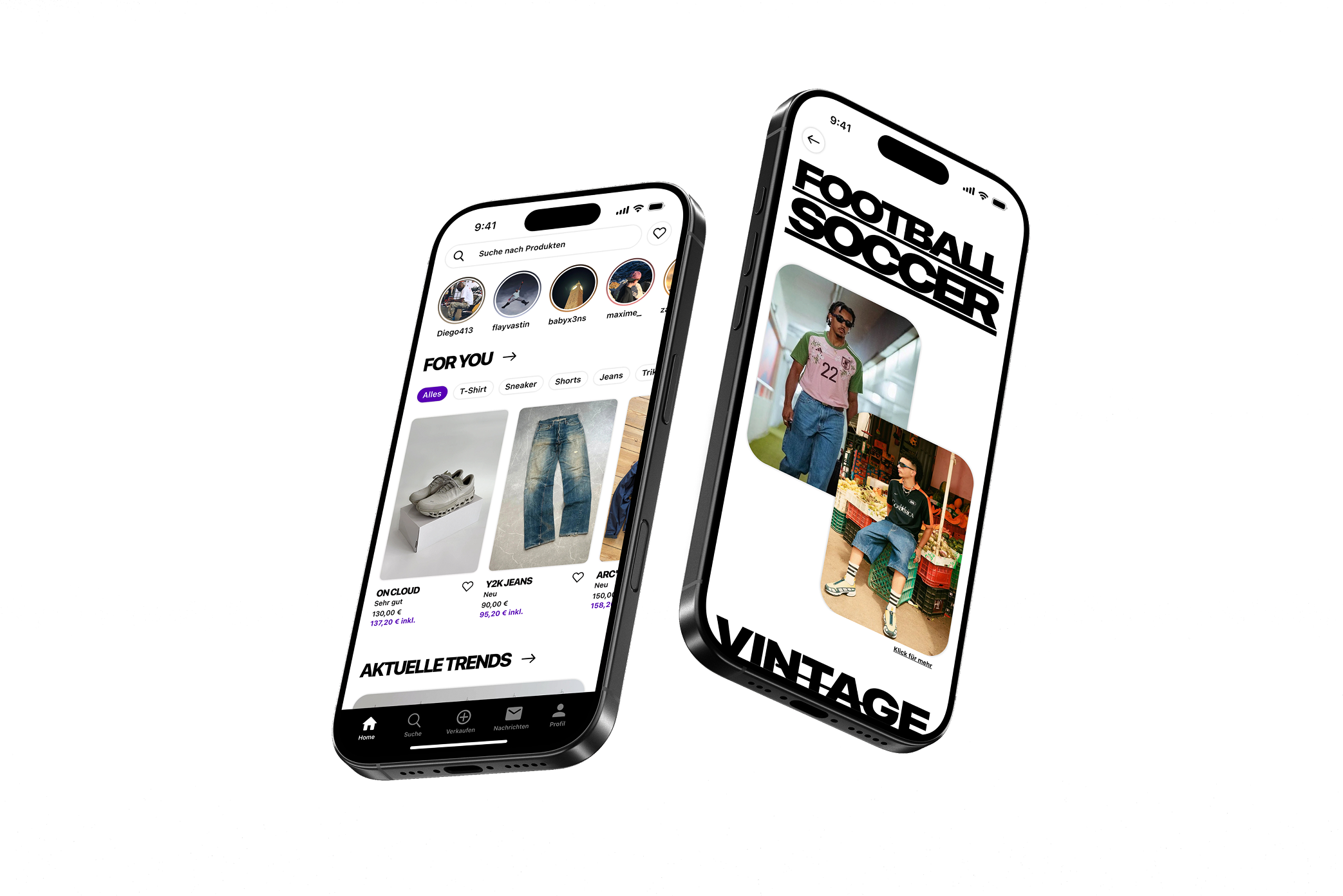
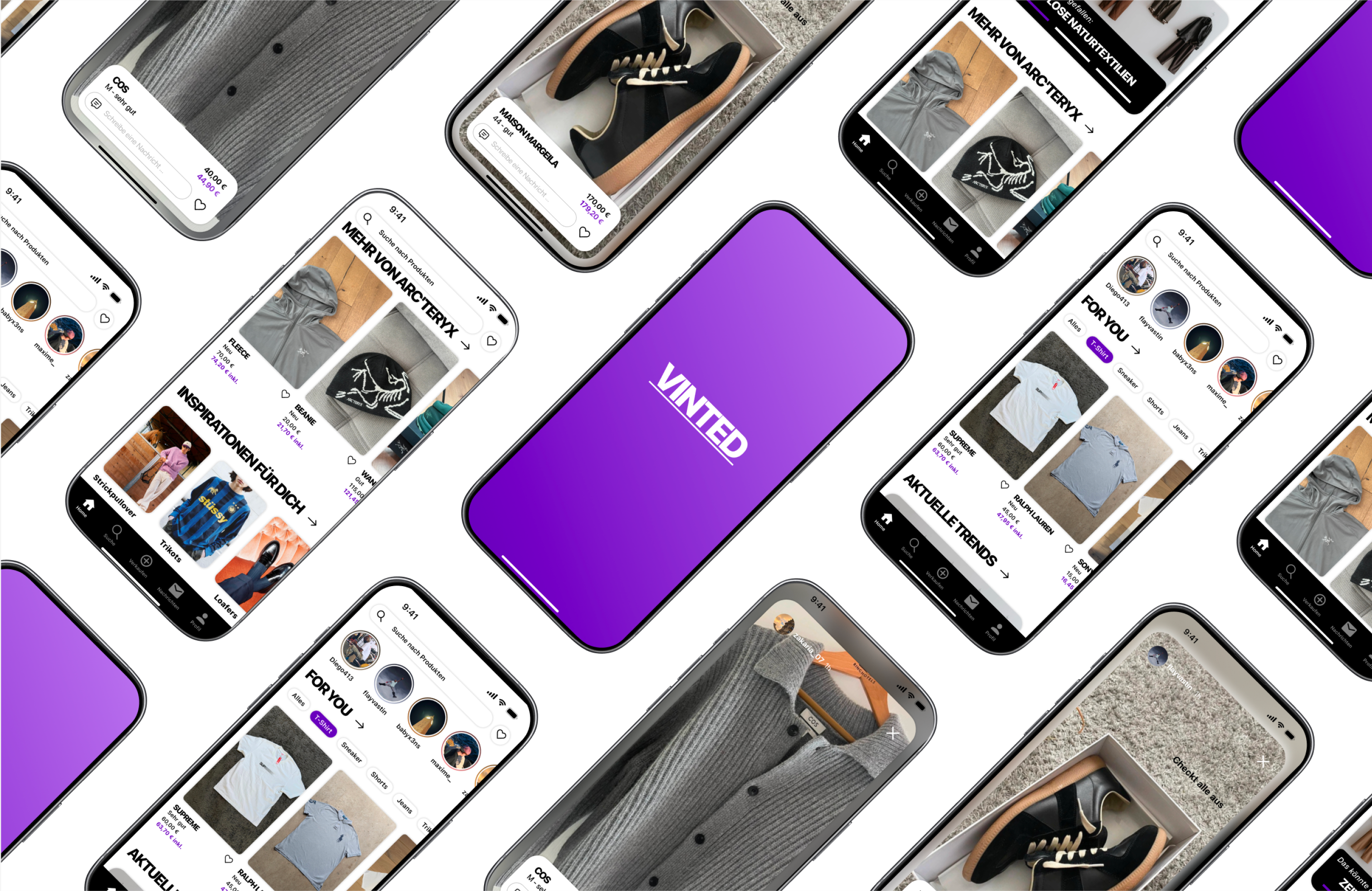
For the course Application Design 1, we developed a thorough redesign of the Vinted app. While Vinted is a well-established platform, we identified several weaknesses in its information architecture and user experience. Our goal was to create a clearer structure, build greater trust within the buying process, and offer more inspiring content—without compromising the platform's accessibility.
Vinted Redesign
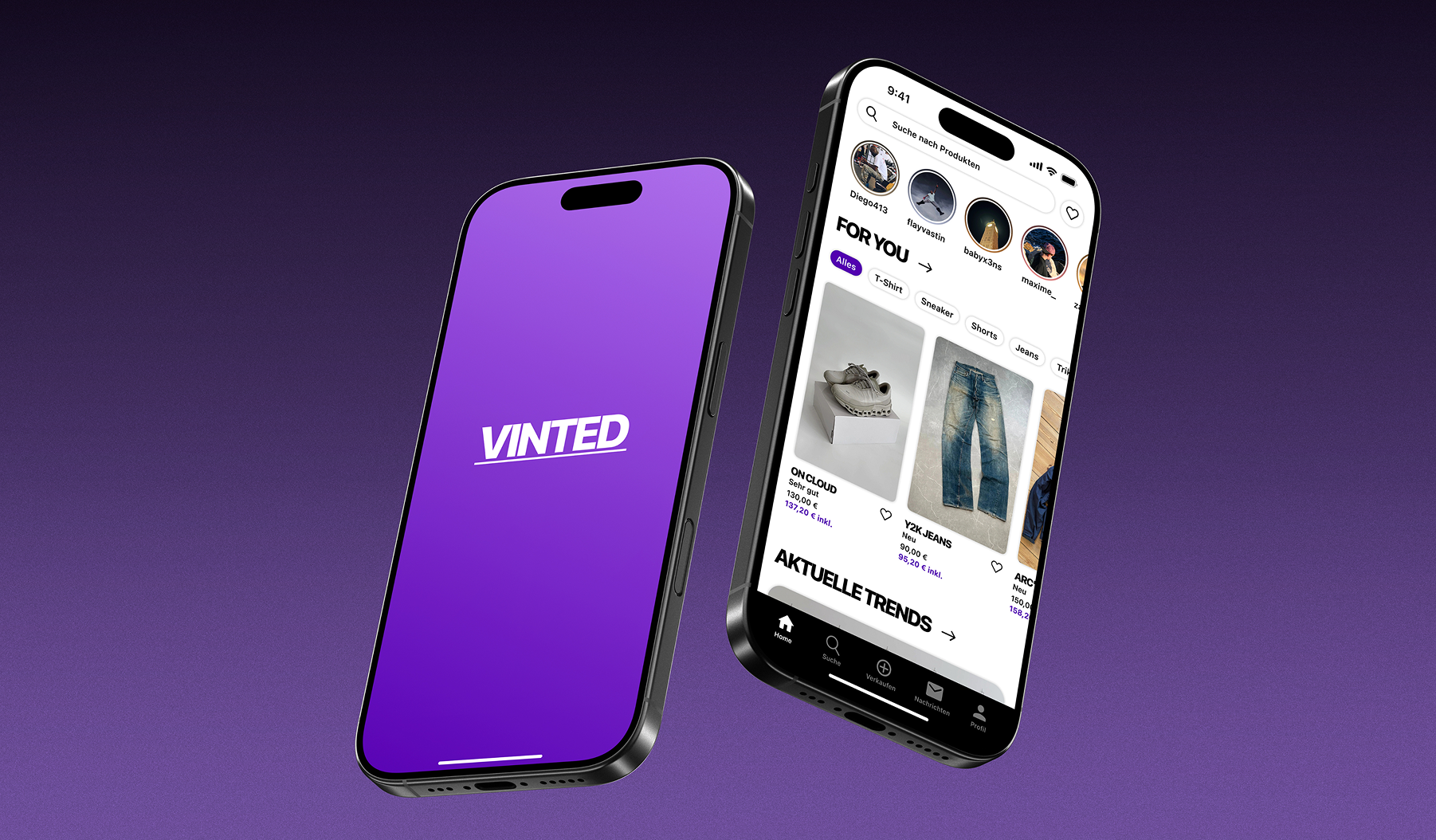
We started with an in-depth competitive analysis (GOAT, Grailed, Vestiaire Collective), surveys, and twelve interviews.
Research and Insights
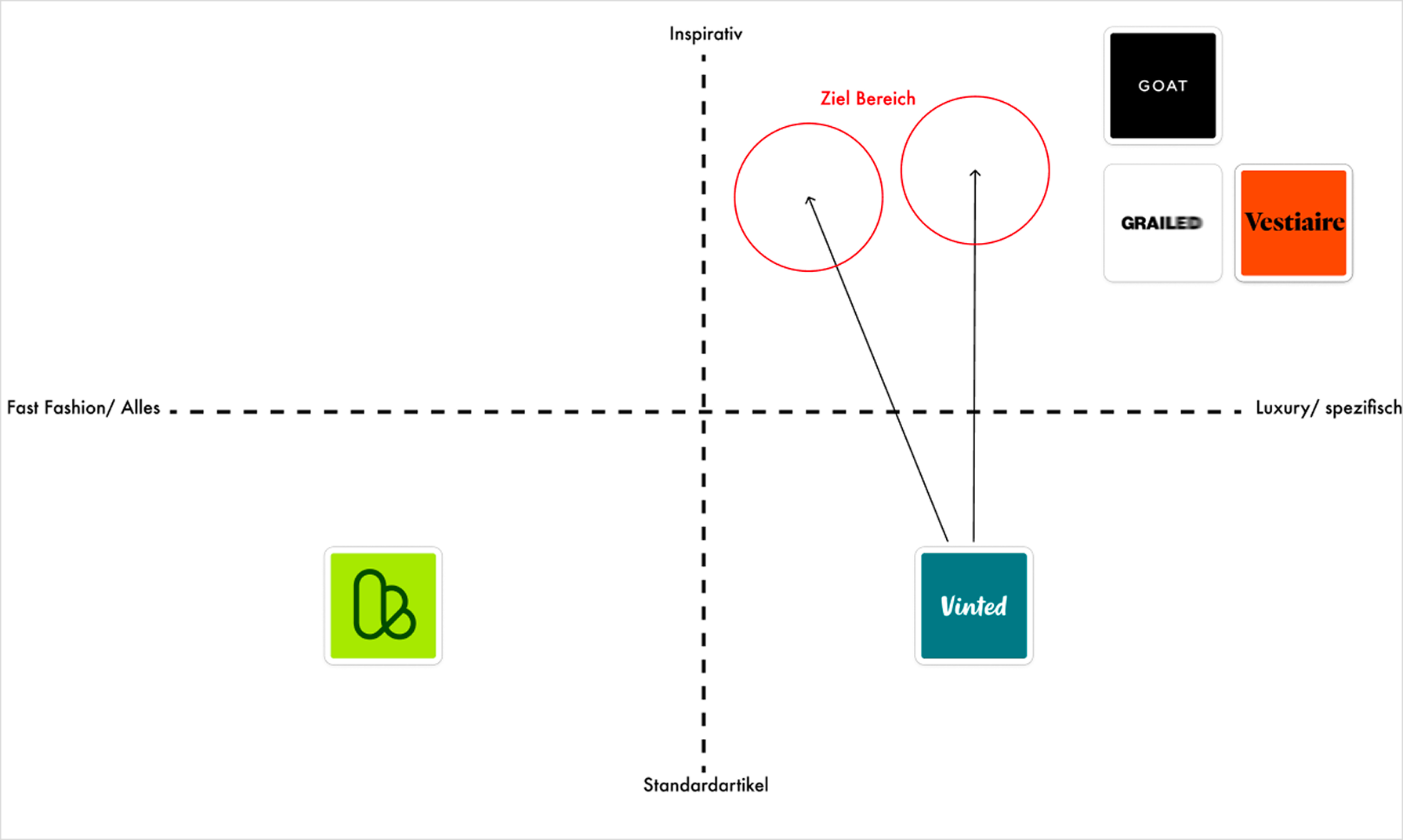
These insights formed the core of our Value Proposition:
Pain Points
Needs
cluttered search & chaotic filters
lack of transparency → low trust
poor presentation: few images, unclear item conditions
cumbersome communication between sellers and buyers
precise, fast search
higher-quality product presentation
clear and fair buyer protection communication
storytelling & inspiration
+
An app that makes sustainable buying and selling easier through intuitive features, smart recommendations, and a trusted community.
Conception
Design Process
Through Crazy 8's, the key functions emerged:
– new scroll/swipe story function
– optimized filters & categories
– revised listing flow (with Smart Pricing)
UI Design
Visual Direction
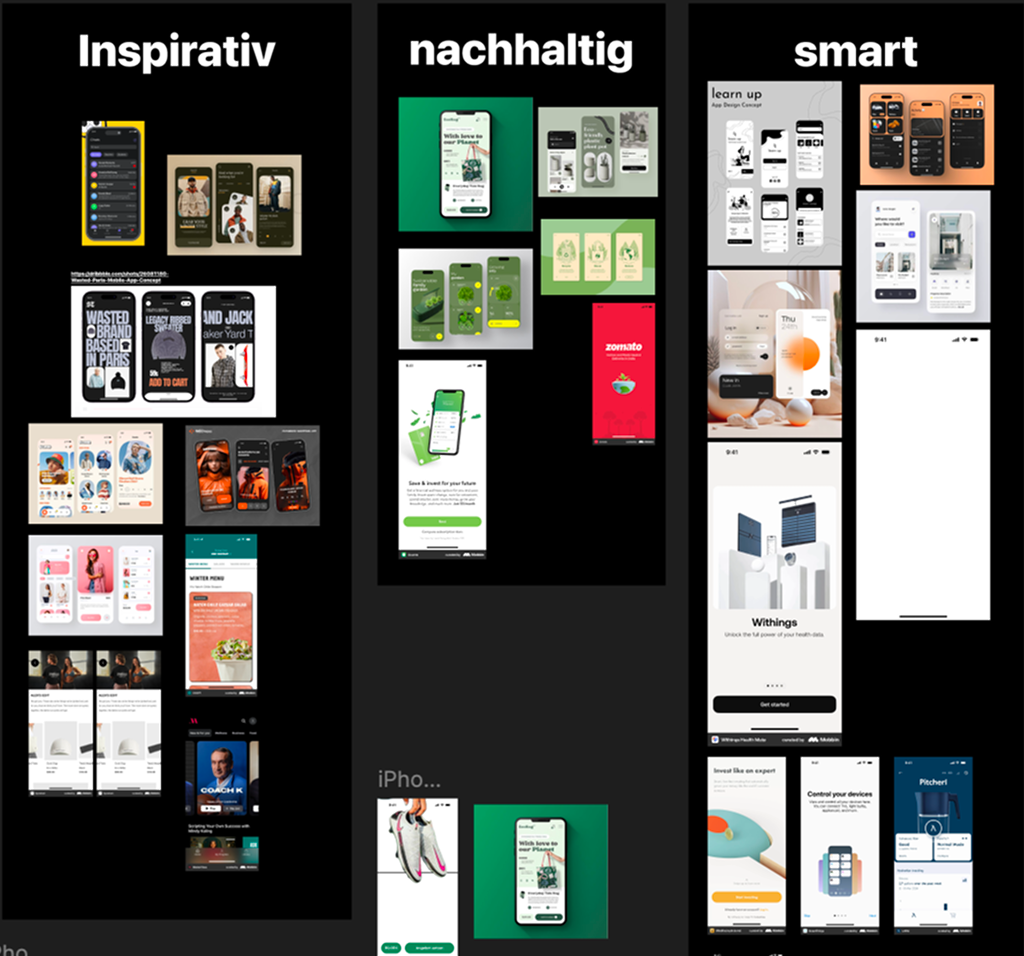
Based on our mood board (inspirational, sustainable, smart), we developed a modern aesthetic with a focus on clarity and an editorial look.
UI Design
Color Choice
The new purple color #5E00B6 gives the brand a distinctive, fresh, and recognizable visual identity.
Solution
Key Features
Solution
Key Features
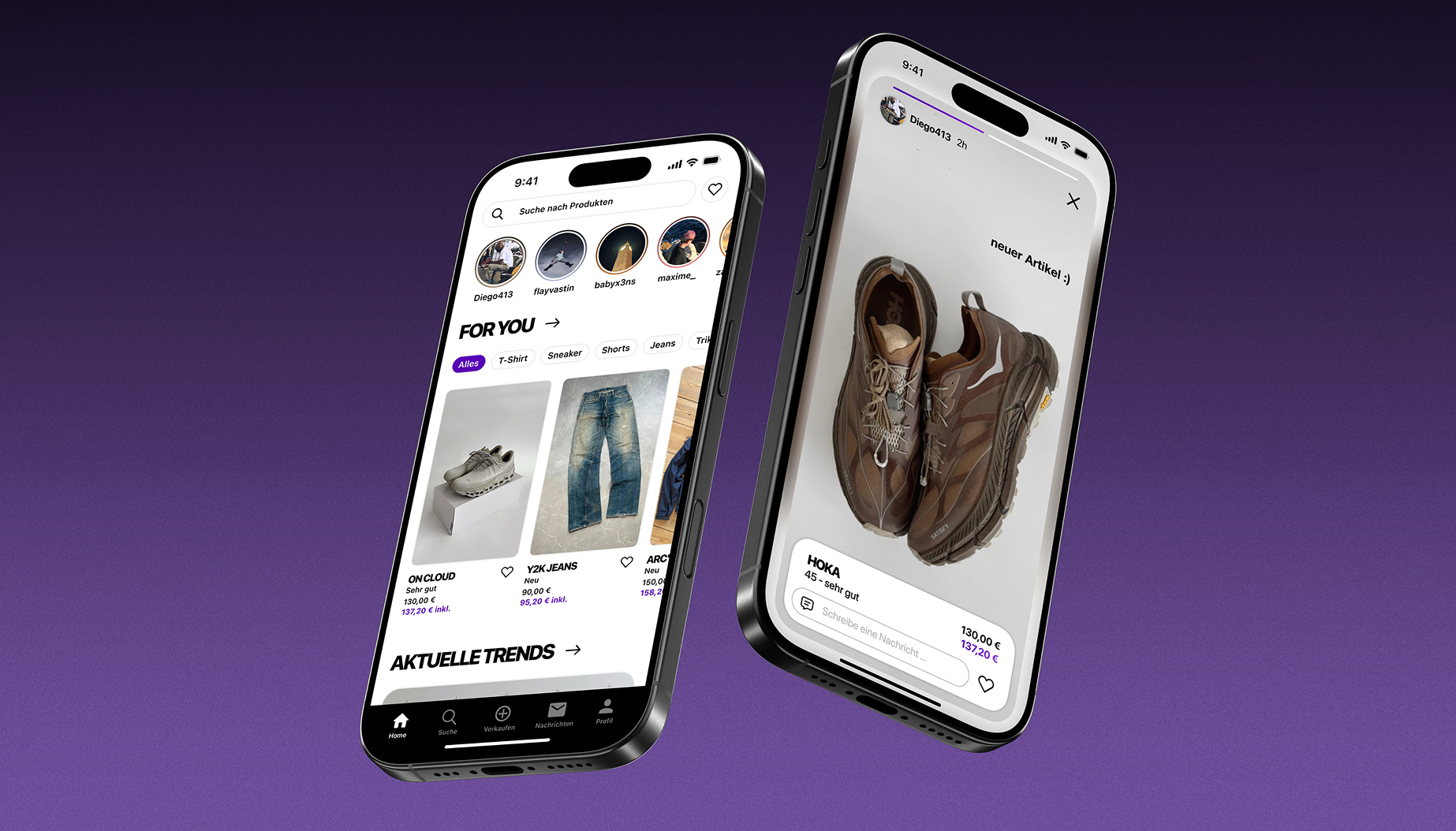
1. Story function for sellers
New items are promoted through stories – inspired by Instagram, but specifically tailored to products.
Solution
Key Features
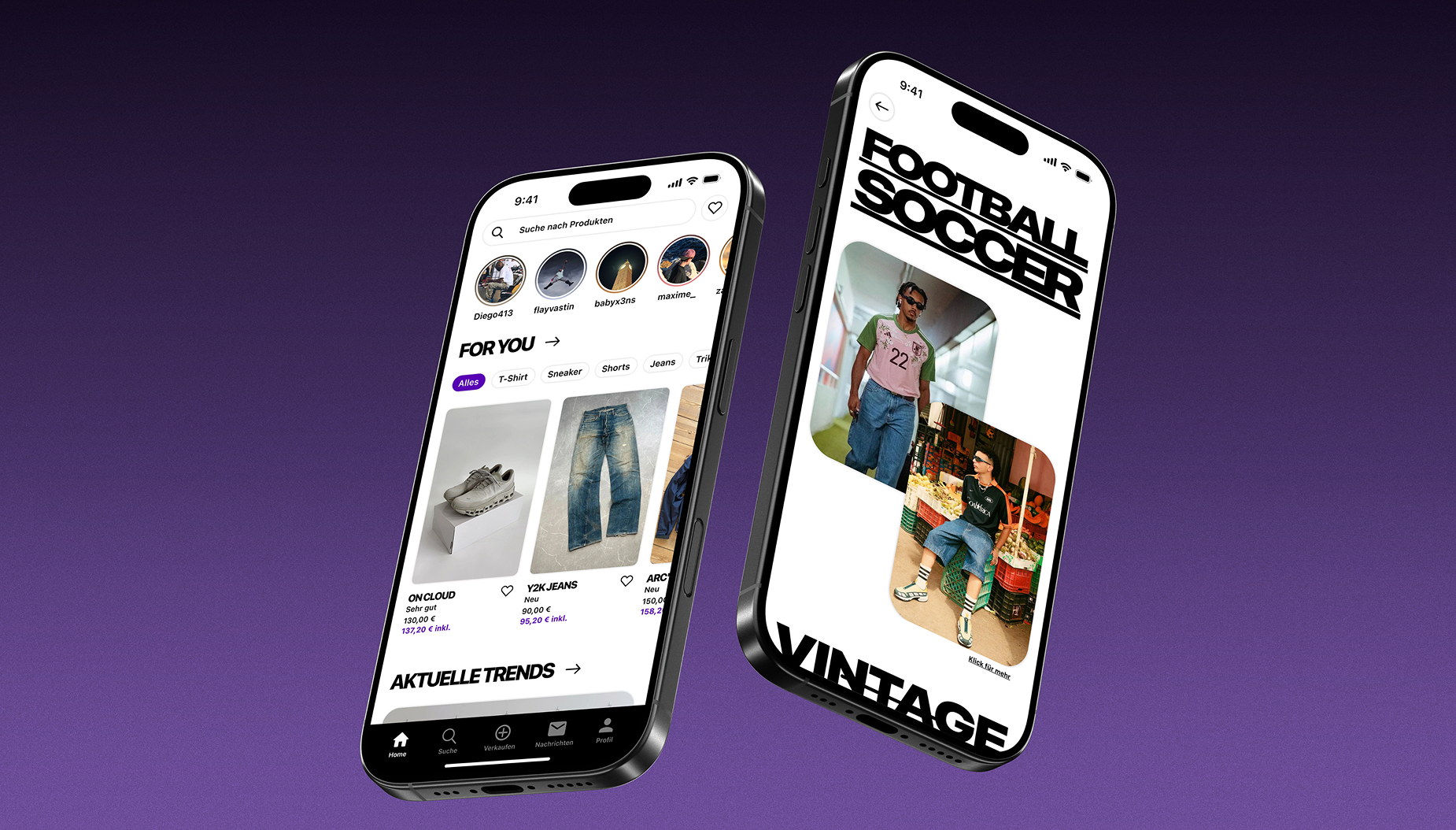
2. Inspiring Editorials
Editorial style features link mood shots with matching listings.
Solution
Key Features
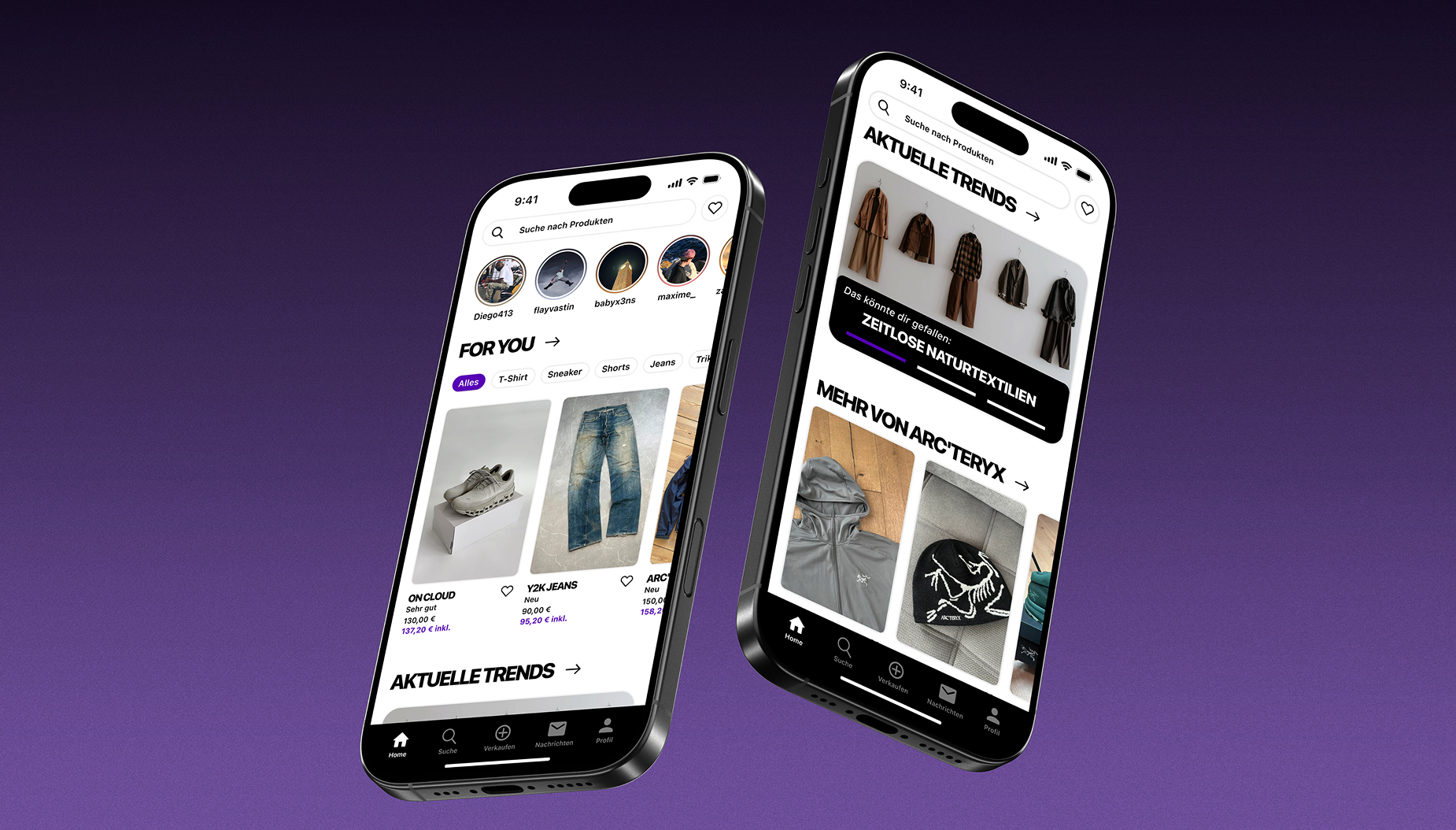
3. Smart Feed & Trends
Personalized trend cards, brand worlds, For You lists – combined with filter logic.
Learnings
This project further sharpened my skills in user research, information architecture, UI design, and prototyping. It became particularly clear how essential an early, shared style guide and a clearly defined user flow are.
Working on research-based solutions, instead of "just designing", reflects exactly the design ethos of HfG: user-oriented, reflective, systematic.